Wednesday, June 16, 2010

blog #88 Where am I for the next 10 days? Medical Birthright in Israel

I was accepted for the “Medical Students Mifgash Experience” sponsored in partnership with American Physicians Fellowship for Medicine in Israel, taking place from  June 17-28 2010.

Check out the video

“The American Physicians Fellowship, established in 1950, is a non-profit organization dedicated to advancing the state of medical education, research, and health care in Israel. The ‘Medical Students Mifgash Experience’ pairs American health professionals for all 10 days of the program in Israel. Highlights include participation in field-training exercises, military medic simulations, and opportunities to network with Israeli physicians of all backgrounds. It's a special way to experience Israel and deepen ties with your Israeli colleagues.”


I am excited to visit a new country and meet new people, but I’m mostly excited for the clinical component of this trip because it is specifically aimed at Med/Health students. As an aspirating Registered Dietitian (I graduate with my bachelor in science this fall), I will receive an invaluable experience observing the practices in Israel and then cross-comparing them with the clinical settings here in America. When I return to volunteer at New York Presbyterian hospital in July, I will have a deeper understanding and appreciation of the clinical settings.  

Tuesday, June 15, 2010

blog #87 Lecture at John Jay College about anaerobic vs. aerobic training

Last week I was a guest speaker at John Jay College in Manhattan. I was asked to speak about any topic relating to exercise in professor Meredith Sobel’s Physical Education class. I also showed the students some basic stretches and body weight exercises that can be performed almost anywhere without the use of equipment.

My topic was the very basic differences of anaerobic vs. aerobic training

Anerobic=heavy or moderate lifting from dumbbells or barbells. These are movements like dead lifts, and power exercises like clean and press (requiring short bursts of energy or limited oxygen)

Aerobic=long, sustained exercises like running or jogging (requiring stamina and the presence of oxygen)

1.      Anaerobic exercises use resistance so that you will also be building muscle, plus bone as an added benefit.
2.      Aerobic exercise will have more of an impact on the cardiovascular and circulatory system.
3.      Combining the two would give the greatest health benefits.


Examples of anaerobic exercise include: heavy weightlifting, any type of sprint (running, biking, swimming, etc.), jumping rope, hill climbing, interval training, isometrics, or any rapid burst of hard exercise. 

What are the Benefits of Anaerobic Exercise? 

Anaerobic exercise uses your muscles at a high intensity for a short period of time. As a result, it can help:
·         Develop stronger muscles
·         Improve your VO2 max (the highest amount of oxygen one can consume during exercise) and thus improve your     cardio-respiratory fitness
·         Increase your capacity to withstand the buildup of waste substances (such as lactic acid) and  remove them from the  body. This means your endurance and ability to fight fatigue will improve.

Aerobic exercise is recommended for weight loss initially. General guidelines suggest 30 to 45 minutes of aerobics with moderate-to-high intensity three to five times a week. Examples include:
1.      Walking
2.      Jogging
3.      Cycling
4.      Treadmill

Because some of the students in this class lead a sedentary lifestyle, Professor Sobel added that doing a little bit of physical activity every day is better than nothing. Taking the stairs and getting out the subway one station earlier can help a sedentary person increase their level of endurance. Lastly, she recommended focusing on the guideline that even a 10 percent body weight loss is a great feat.

If you are sedentary, it is recommended to start with aerobic exercises and then incrementally add in anerobic exercises to optimize your level of fitness.
I recommend reading this article: 

“Physical fitness is a compromise of cardiorespiratory endurance, strength, flexibility, power, speed, coordination, agility, balance, accuracy and toughness.”

This article stresses, “Instead of aerobic vs. anaerobic it should be aerobic and anaerobic!”
 What are you doing in your routine to add both cardio (aerobic) and strength (anaerobic)?

blog #86 Summer Playlists (free downloads)

When you are working out this summer, particularly outdoors, what tunes are you listening to stay motivated? My client and I were talking this past week during her session about music and motivation. She has been listening to her iPod more often and she expressed her newfound love for an intense beat.

New FREE downloads:  (just click to open and drag to your media player, such as iTunes)
DJ CHACHI – SUMMER MIX
And
DJ CHACHI – LACTOSE INTOLERANCE VOLUME 1

Personally, I think the Summer Mix has too much rap, but the beats are still good for running. I like the Lactose Intolerance Volume 1 mix better.

Do any of my readers know of any free downloads to recommend to other workout enthusiasts? 

Saturday, June 12, 2010

blog #85: How to cure a hangover with nutrition

I want to start this post by saying that drinking alcohol can displace nutrients in the body, damage your liver, and cause unwanted weight gain, among a long list of other detrimental effects.

                Drink Alcohol in Moderation, if at all.
Moderation = 1 drink/day for women
2 drinks/day for men


You can cure a hangover with: 1. Sleep 2. Fruit or water 3. No coffee

1. Go back to bed
—  A body needs rest to recover from what you've put it through. Chances are, you stayed up late earning your hangover.
—  You'll cure your hangover faster if you get some rest. Sometimes time and sleep are the best hangover remedies.
—  Heavy alcohol abuse has adverse effects on nutrition both because it displaces other, more nutritious foods in the diet and because chronic use impairs absorption and metabolism of many nutrients including: protein, thiamin, B6, niacin, riboflavin, magnesium, zinc and calcium.

2. Rehydrate.
Alcohol is a diuretic.
—  This problem is made worse by the fact that when people are drinking alcohol, they seldom stop to have a glass of water.
—  This loss of fluids causes dehydration.
—      Symptoms of dehydration include headache, dry mouth, and thirst.
—  Drink water. Eat water-filled fruits.(like grapefruit or berries)

3. Skip coffee.
Coffee is a diuretic, so drinking it will be counterproductive to your body’s needs by inhibiting hydration. Stick with water and fruit. Toast helps, too.

check out this article for more detailed tips and tricks 

Friday, June 4, 2010

blog #84 meat facts

To follow up on my “meat as a condiment post,” here are some interesting meat facts:

Hot dog facts:about 460 calories including bun (170 from fat)
Rib facts: 236 calories in 3 oz (182 from fat)
Lean chicken facts: 120 calories in 3 oz (14 from fat)
Turkey dog 100 calories (70 from fat)


When choosing meats, why not make healthier choices like a turkey dog opposed to a hot dog, or lean chicken breast as opposed to ribs? Or have your ribs and hot dog, but use meat as a condiment (meaning portion control)?
I gave the calories for one ounce less then one serving of ribs and chicken, but I didn’t mention the size of the hot dog because they vary. Also do you eat your hot dog plain or with toppings? Ketchup is extremely high in sugar and carbohydrates. Chilli dogs and hot dogs with cheese pack on the calories. Mustard is a better option. If you keep adding on, your hot dog will eventually look like this:


Curious what’s in a hot dog? I will answer in a future blog post. Feel free to comment!

Nutrition Facts                                                           (hot dog)
Serving Size: 1 sandwich (175.0 g)


Amount per Serving


Calories 460
Calories from Fat 170


% Daily Value *
Total Fat 18.9g
29%
    Saturated Fat  5.1g
26%
    Monounsaturated Fat  9.1g

    Polyunsaturated Fat  3.5g

Cholesterol 79mg
26%
Sodium 973mg
41%
Potassium 263mg
8%
Total Carbohydrate 55.8g
19%
    Dietary Fiber  0g
0%
    Sugars  0g

Protein 16.8g
34%


Vitamin A
4%
Calcium
102%
Iron
34%
Vitamin D
0%
Vitamin E
0%
Thiamin (B1)
0.28mg
Riboflavin (B2)
0.7mg
Niacin (B3)
4.165mg
Vitamin B6
4.4%
Folic Acid (Folate)
44mcg
Vitamin B12
7.33333333
Phosphorus
166mg
Magnesium
18mg
Panthothenic Acid
1.348mg
Zinc
8.73333333
Manganese
0.193mg


Est. Percent of Calories from:
Fat 37.0%     Carbs 48.5%
Protein 14.6%

Monday, May 31, 2010

blog #83 My calves hurt

A couple weeks ago, my calves were burning up like crazy from running and jumping a bit more then usual. I was in so much pain and it seemed like no matter what I did, I was debilitated. I decided to reach out to my community and ask people what to do. I collected some tips and have categorized them into both free/cheap and non-free tips/tricks.

While stretching your calves can be a good way to elongate the muscles, it is somewhat limiting because self-stretching will only hit the superficial (or outside portion) of the muscle. To hit the deep muscles, you need to be more creative.

I asked a massage therapist and she said that the “tennis ball approach” is a good way to alleviate tension (but it can hurt!). Foam rolling is good, too, as well as getting professional massages.

check out the "tennis ball approach"


Free/Cheap
$-$$$
Self-massage
Tennis ball approach
Calf stretches
Downward-facing dog
Soak calves in warm water for 15 minutes
Professional massage (my fave option)
Foam rolling (most foam rollers start at about $20 dollars, and most gyms have them)
A heating pad or hot water bottle


Friday, May 28, 2010

blog #82 What do you put on your salad?

A salad is a salad, right? That means that it’s healthy if there is some green? NO NO NO!

pick veggies that:
  • have high water content
  • have low calorie count
  • are nutrient dense
  • have high satiety factor (will fill you up)
  • add color and variety!!

Ideas: broccoli, cucumber, tomato, spinach, romaine lettuce, fresh herbs, citrus, celery.

Keep to a minimum (or avoid): cheese, dry fruit, croutons, bacon bits, breaded chicken

Balance your salad by adding:
·         Omega 3-rich  foods like canned tuna (skip the mayo!) or salmon
·         Beans or legumes
·         Nuts: walnuts can be a nice addition to a salad, but remember to measure your portions. Use nuts as a condiment not the main portion.
I
I


I got this salad at Trader Joe's last week (and loved it!) Remember to read the label, add dressing per bite or just sparingly, and add variety.

Saturday, May 22, 2010

blog #81 Using meat as a condiment

I do not advocate any one particular diet because, much like workouts, diets will depend on individual needs. I don’t preach vegetarianism, but I do recommend an adequate intake of fruits and veggies every day. The professor of my Medical Nutrition course this past semester was part of this film titled "Food fo the Fight."
A quote that caught my attention from the film was “meat should be eaten as a condiment.”
I thought that was fantastic advice! I never tell clients or friends that they HAVE TO give up something that they love. Instead of deleting something, I recommend curtailing portions. For example, instead of sloshing 4 tablespoons of cream in your coffee, measure out 1 or 2 tablespoons. Taking control of your health and wellness is about moderation, dedication, and consistency.

Lean sources of protein are highly recommended, but if you are eating lots of fried or highly fat-saturated meat choices, maybe you can start by limiting your consumption or taking note of how much and how often you elect to eat foods that are less lean or nutritious.


Start with small goals and objectives
Goal: to lower saturated fat intake.
Objective: Count portions per day, count portions per week, substitute saturated fatty options like hot dogs for lean sources or just ….have a bite. Therefore, think of meat as a condiment. So what condiments do you use? I use mustard and hummus often with my veggies as a dip. So if I were to treat meat as I do hummus, I would only consume a small amount…say, an ounce. 

Another way to monitor portions is the “plate method.” Think of three-quarters of your dinner plate’s contents as being of plant origin and one-quarter animal sources.

Monday, May 17, 2010

blog# 80 shopping aisles and placement: Where are all the whole grains??

When speaking with a classmate/friend Sahara she said to me awhile back:

“The grocery store is intimidating.”

I guess that depends on where and what you shop for.

I thought a great deal about her comment and I decided to document my weekend grocery store trip to Fairway market in the Upper West Side.

I wonder: Why are all the whole grains hidden? At this market and others, I notice that the eye-level foods are much more heavily processes and higher in sugar content than the foods placed closer to the floor. In order to photograph Old-Fashioned oats, I had to crouch down because that’s where they’d hidden them! Without having nutritional knowledge about food processing levels and sugar content, it is easy to feel intimidated and pick the first thing you see.

The instant oats found at eye level are not as good as Old-Fashioned oats because there is more processing needed to make them “instant.” As I’ve written about before, it’s healthier to eat slow-cooked oats that are not flavored. Flavor them yourself with creative ideas like cinnamon, nuts, peanut butter (but measure!)

Have more ideas? Let me know.

General tips that I follow in grocery stores:
  • Stick with the outside aisles. (That’s where they put fresh foods like produce.)
  • Avoid last-minute purchases
  • Don’t shop hungry. (We have all done this and ended up paying/buying more--and choosing more unhealthy foods!)
  • Bring a list. (I recommend keeping a digital list on your cell phone so that you don’t forget it.) 
  • Look down and around for whole grains. (Sometimes they are less visible then processed ones.)


Notice in these pictures that the grains with the least amount of processing are more toward the floor. The eye level foods have more sugar...read labels, look around and shop smartly!

Saturday, May 15, 2010

blog #79 What type of gloves do I need to protect my hands?

To follow up with my previous post about workout gloves, I’d like to add that there are many types of gloves that can protect your hands and fingers while working out. 

Some of the options that I have seen include: velcro, slip-on, zipper, and seven tabs near the fingertips for easy removal.

Did you know that workout gloves are washable?
I used to wear the slip-on type, but I found them irritating to remove. I now prefer velcro gloves, but actually I don’t wear them at all because I can’t seem to remember them when I go to the gym.

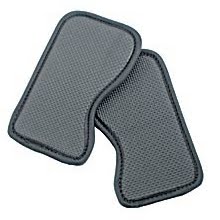
I like grizzly pads, which you can use for pull-ups and heavy deadlifts. Straps are another alternative to gloves, but straps serve a different function, which is to strengthen you grip. (Gloves protect, straps help strengthen, and grizzly pads can be used either way.)

With that said, do any of my readers have favorite workout gloves that they wish to share?


Gloves for protecting hands:


Grizzly grip pads for grip strengthening:

Lifting straps to improve strength:


In closing:
  • gloves protect your hands
  • grizzly pads may help you grip more, but also strengthen your grip
  • straps: strengthen your grip
What if you want a stronger grip?  You should use no gloves (if you don’t care about calluses).