Showing posts with label workout. Show all posts

Monday, December 27, 2010

blog #110 Music for motivation

Last week DJ ChaChi posted "Fashion Indie Volume 1" as a free download on his website. I highly recommend listening to his mixtape while working out in order to finish your run/lift with an increased intensity.


I am also a huge fan of Girl Talk's "All Day" album which is also a free download. 


Sunday, October 3, 2010

blog #105 come check out my new Fitness Class

Come check out my new fitness class Abs and Butt on Tuesdays and Sundays


where: Method Fitness
cost: $15 dollars tuesday's class (this months special), $25 dollars Sunday's class
location: 201 E. 67th st. 
schedule


Tuesday 6-6:55pm Abs and Butt
Sunday 10-10:55am Abs and Butt

Monday, September 20, 2010

blog #103 tips from my guest speech

I was asked to be a guest speaker at John Jays "Topics in Health" course this evening. In addition to walking students through a couple workout routines I have composed a "tips sheet" for reference. 


Tips for how to do exercise anywhere

Section I: How to get started with an exercise routine

1.     Ease into it, small steps help you reach bigger goals.
2.     Exercising for 10 minutes twice a day is equivalent to the recommended 20-30 minute exercise session.  It is easy to work up to 30 or more minutes per session by splitting the sessions into three 10-minutes sessions per day.
3.     Set goals and objectives for what you want to achieve.
4.     Hold yourself accountable.
5.     Map out a plan.
6.     Make your nutrition and workout plan work together.
7.     Find a workout partner.
8.     You don’t need a gym to be fit; these quick workouts will show you how to do exercises anywhere at any time.
9.     Balance your routine. A complete, safe and effective fitness program must include aerobic exercise, muscular strength and endurance conditioning, and flexibility exercise.

Section II: How to stay motivated once winter hits

1. Be prepared by checking the weather.
2. Wear weather appropriate clothes.
3. Stay hydrated.
4. Make a plan and update it.

Section III: 10 exercises that can be performed anywhere
1. Triceps dip on a chair or bed
2. Squat onto a chair
3. Stair climbing uphill (stairs at home or outside)
4. Cleaning/scrubbing
5. Carrying heavy groceries
6. Walking briskly around the city
7. Wall squats (holding for 30-60 seconds)
8. Wall push ups
9. Wall stretches
10. Downward dog

Minimal equipment like a jump rope, a yoga mat, or a medicine ball can make a big difference in your routine. Without equipment you can still get a great workout by incorporating more advanced exercises such as:

pushups, squats, lunges, triceps dips and  pull ups

Summary of workouts taught in class:

With equipment:
  1. Jumprope 
  2. Medicine ball raises
  3. Squats holding the medicine ball
  4. Yoga with a yoga mat
Without equipment
  1. Pushups (on knees first or on toes)
  2. Squats with hands on hips or reaching forward (check your form out in the mirror)
  3. Lunges alternating legs
  4. Jump rope without a jump rope
  5. Walking 
  6. Yoga without a yoga mat

A note on stretching for flexibility…
·      Stretching should be incorporated into any fitness routine

·      As we work muscles, stretching is necessary for continued flexibility, growth and repair of those muscles.

·      Proper stretching involves holding a mild stretch for 15 to 30 seconds while you breathe normally.

·      Always warm up before you stretch. Like strength conditioning, flexibility exercises should include stretching for all of the major muscle groups.


               Stretching increases flexibility. Flexible muscles can improve your daily performance. Tasks such as lifting packages, bending to tie your shoes or hurrying to catch a bus become easier and less tiring.
               Stretching improves range of motion of your joints. Good range of motion keeps you in better balance, which will help keep you mobile and less prone to falls — and the related injuries — especially as you age.
               Stretching improves circulation. Stretching increases blood flow to your muscles. Improved circulation can speed recovery after muscle injuries.
·      Stretching can relieve stress. Stretching relaxes the tense muscles that often accompany stress.

Monday, August 9, 2010

blog #95 Why I love the treadmill

Environment-
While I love running outside, the treadmill is in a consistent environment. You can’t make weather excuses for skipping a workout with the treadmill. And some treadmills even have TVs for entertainment distraction.

Consistency-
Unlike outside where the terrain can be different, the treadmill is always a soft band that your shoes (and knees) are familiar with.

Control-
You set the pace (fast or slow) and incline (steep or just one percent). Outside you can do stadium runs up and down stairs (my favorite) or flat-land runs, but the treadmill allows you to manipulate a multi-faceted training approach all in one machine without scheduling a creative trail run.

Cross training-
The treadmill isn’t just for weight loss. If you utilize all functionalities of the treadmill, you can burn fat, but you can also preserve muscle (by walking/brisk jogging at an incline). One of my favorite ways to use the treadmill is with circuit training. I have some of my clients use the treadmill for a couple minutes then alternate to other exercises to keep heart rates up, which builds endurance.

Beginner plan for utilizing the treadmill in a circuit (an example):

  •       Plank for 30 to 60 seconds
  •       Slow squats with body weight for 1.5 minutes
  •       Push ups on toes until body fails, then on knees for 1.5 minutes
  •       2 minutes of brisk walking (3.8 to 4.0 MPH) on eight percent incline
  •    1 minute of jogging on one-percent incline at 6.5 MPH

      Wednesday, August 4, 2010

      blog #93 treadmill rules


      1. ALWAYS walk/jog/run at a one-percent incline at least. 

      2. NEVER hold on to the treadmill. Keep your arms moving (no hands on hips, NO HANDS ON TREADMILL)

      3. Running or jogging for 30 minutes is equivalent to walking for an hour

      4. A brisk walk or light jog at a high incline really focuses on the back of the legs (hamstrings).

      5. It’s OK to take breaks and try intervals (which are great for fat loss), such as running at a one-percent incline and then brisk jogging at an eight-percent incline.

      Why?

      1. Moving on the treadmill with at least a one-percent incline is most similar to real life. Anything under that is more like walking at a decline.
      (check out this abstract)

      check out this article from runner's world: 
      “Research has shown that when you set the treadmill at a 1-2% incline, it will simulate the "intensity" of outdoor running (make up for the lack of wind resistance in outdoor running). “

      I recommend increasing the incline and manipulating your speed to optimize your workout.

      2. You are not burning optimal calories if you are hanging onto the treadmill. Decrease the speed/incline, or stop and take a break, but DON’T HANG ON. 
      You burn more calories when you move more body parts, so pump those arms! The faster your arms move, the faster your lower body moves too. Try it. (please read my former cardio post

      3. Walking is great exercise and should not be discounted. However, you have to walk twice as long to reap equivalent benefits of running.

      4. A lot of bodybuilders and athletes trying to preserve muscle do this high-incline running, because it strengthens the hamstrings (back of thighs), which tend to be less developed than the quadriceps (front of the thighs).

      5. I’d rather my client take a break then hang onto the machine. Mix up your workout constantly and cross-train.


      Saturday, July 17, 2010

      blog #91: Lululemon’s complimentary yoga class


      This past weekend I finally made it to a free yoga class at Lululemon on E. 66th and Third Ave. This isn’t just a one-time free class -- it’s offered every weekend, so I encourage anyone who lives near a Lululemon location to check out the schedule at their local store.

      What is Lululemon?
      Lululemon’s first studio, a store offering athletic apparel, opened in 1998 in Vancouver. There are now more than 100 locations in the U.S., Canada, Australia, China, and more.

      The Yoga Class
      The class was offered inside the clothing store, and the space was neat and tidy. Mats were laid out among the clothing displays. The class was overcrowded (it’s free, after all), but the instructor was great . The class was a level 1 vinyasa class so beginners were welcome as well as more advanced yogis. The instructor did a good job at demonstrating various levels of the poses.  The room was packed with practitioners of all levels from beginners to. There were also a handful of men in attendance. Overall, it was a good experience.


      Read more about yoga on Lululemn’s site or check this out


      Tuesday, June 15, 2010

      blog #87 Lecture at John Jay College about anaerobic vs. aerobic training

      Last week I was a guest speaker at John Jay College in Manhattan. I was asked to speak about any topic relating to exercise in professor Meredith Sobel’s Physical Education class. I also showed the students some basic stretches and body weight exercises that can be performed almost anywhere without the use of equipment.

      My topic was the very basic differences of anaerobic vs. aerobic training

      Anerobic=heavy or moderate lifting from dumbbells or barbells. These are movements like dead lifts, and power exercises like clean and press (requiring short bursts of energy or limited oxygen)

      Aerobic=long, sustained exercises like running or jogging (requiring stamina and the presence of oxygen)

      1.      Anaerobic exercises use resistance so that you will also be building muscle, plus bone as an added benefit.
      2.      Aerobic exercise will have more of an impact on the cardiovascular and circulatory system.
      3.      Combining the two would give the greatest health benefits.


      Examples of anaerobic exercise include: heavy weightlifting, any type of sprint (running, biking, swimming, etc.), jumping rope, hill climbing, interval training, isometrics, or any rapid burst of hard exercise. 

      What are the Benefits of Anaerobic Exercise? 
      Anaerobic exercise uses your muscles at a high intensity for a short period of time. As a result, it can help:
      ·         Develop stronger muscles
      ·         Improve your VO2 max (the highest amount of oxygen one can consume during exercise) and thus improve your     cardio-respiratory fitness
      ·         Increase your capacity to withstand the buildup of waste substances (such as lactic acid) and  remove them from the  body. This means your endurance and ability to fight fatigue will improve.

      Aerobic exercise is recommended for weight loss initially. General guidelines suggest 30 to 45 minutes of aerobics with moderate-to-high intensity three to five times a week. Examples include:
      1.      Walking
      2.      Jogging
      3.      Cycling
      4.      Treadmill

      Because some of the students in this class lead a sedentary lifestyle, Professor Sobel added that doing a little bit of physical activity every day is better than nothing. Taking the stairs and getting out the subway one station earlier can help a sedentary person increase their level of endurance. Lastly, she recommended focusing on the guideline that even a 10 percent body weight loss is a great feat.

      If you are sedentary, it is recommended to start with aerobic exercises and then incrementally add in anerobic exercises to optimize your level of fitness.
      I recommend reading this article

      “Physical fitness is a compromise of cardiorespiratory endurance, strength, flexibility, power, speed, coordination, agility, balance, accuracy and toughness.

      This article stresses, “Instead of aerobic vs. anaerobic it should be aerobic and anaerobic!
       What are you doing in your routine to add both cardio (aerobic) and strength (anaerobic)?

      Monday, May 31, 2010

      blog #83 My calves hurt

      A couple weeks ago, my calves were burning up like crazy from running and jumping a bit more then usual. I was in so much pain and it seemed like no matter what I did, I was debilitated. I decided to reach out to my community and ask people what to do. I collected some tips and have categorized them into both free/cheap and non-free tips/tricks.

      While stretching your calves can be a good way to elongate the muscles, it is somewhat limiting because self-stretching will only hit the superficial (or outside portion) of the muscle. To hit the deep muscles, you need to be more creative.

      I asked a massage therapist and she said that the “tennis ball approach” is a good way to alleviate tension (but it can hurt!). Foam rolling is good, too, as well as getting professional massages.

      check out the "tennis ball approach"


      Free/Cheap
      $-$$$
      Self-massage
      Tennis ball approach
      Calf stretches
      Downward-facing dog
      Soak calves in warm water for 15 minutes
      Professional massage (my fave option)
      Foam rolling (most foam rollers start at about $20 dollars, and most gyms have them)
      A heating pad or hot water bottle


      Saturday, May 15, 2010

      blog #79 What type of gloves do I need to protect my hands?

      To follow up with my previous post about workout gloves, I’d like to add that there are many types of gloves that can protect your hands and fingers while working out. 

      Some of the options that I have seen include: velcro, slip-on, zipper, and seven tabs near the fingertips for easy removal.

      Did you know that workout gloves are washable?
      I used to wear the slip-on type, but I found them irritating to remove. I now prefer velcro gloves, but actually I don’t wear them at all because I can’t seem to remember them when I go to the gym.

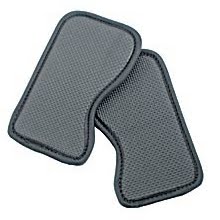
      I like grizzly pads, which you can use for pull-ups and heavy deadlifts. Straps are another alternative to gloves, but straps serve a different function, which is to strengthen you grip. (Gloves protect, straps help strengthen, and grizzly pads can be used either way.)

      With that said, do any of my readers have favorite workout gloves that they wish to share?


      Gloves for protecting hands:


      Grizzly grip pads for grip strengthening:

      Lifting straps to improve strength:


      In closing:
      • gloves protect your hands
      • grizzly pads may help you grip more, but also strengthen your grip
      • straps: strengthen your grip
      What if you want a stronger grip?  You should use no gloves (if you don’t care about calluses).

      Friday, May 7, 2010

      blog #76 Workout gloves and calluses

      During training sessions, I mix up pulling, pushing, and squatting exercises, in addition to abdominal work. When the time comes for pulling, clients SOMETIMES complain that their fingers hurt, or they can't grip the bar, machine, dumbell, etc. Exercises that cause particular complains are pull-ups, heavy lat pulldowns, deadlifts, shoulder shrugs, and farmer’s walks. 

      Solution: workout gloves

      Pulling exercises (especially pull-ups) are hard, but eventually you will get use to pulling and your hands will adapt. If you DON'T use gloves, you will get calluses. 
      Wearing gloves preserves your pretty hands.
      Not wearing gloves allows your grip to strengthen naturally so that you can lift heavier.

      What will you choose? 


      If you want to know more about grip and calluses, check out this article from World Fitness Network

      Wednesday, March 31, 2010

      blog #66: Add variety in your music selection to stay motivated!

      I heard the coolest track The Cure vs. Lil Wayne, titled "Close To Me" (Vengeance Mash Up). This is a free download.

      The source of this track and many similar mash-ups is fridaymixtape.com
      This track is featured in mixtape 34

      The site offers a new free mixtape every weekend...cool!! I am in the process of downloading all 59 mixes, so I will recommend my favorites in future posts. So far, they all sound amazing!

      Remember, switching up your tunes can really help keep you on track while lifting/running/stretching.

      If you want more mellow music to stretch to, or for yoga, let me know and I will recommend accordingly.

      Happy tunes!

      Thursday, February 4, 2010

      blog #57: extreem gym mission statements defined: midcity gym and tanning vs. planet fitness

      I just had so much fun with my "mission statement" post a few days back that I decided to compare two more facilities:
      bodybuilding gym (midcity gym)
      anti-bodybuilding gym (planet fitness)

      Midcity gym and tanning (where I bring private clients to train)
      planet fitness (I have never been to a planet fitness, but I interviewed a former member who is an athlete for this post. There is a planet fitness in Queens and Harlem here in NYC)

      Midcity Gym and Tanning
      "the last real gym"

      Planet Fitness
      "Judgement Free Zone® where a lasting, active lifestyle can be built."

      So what does this mean? Bodybuilders arn't welcome at Planet Fitness, but they should hurry (but not to fast because true meatheads don't do cardio) on over to Mid city for a weight gainer shake which has about 10,000 calories. GROSS. Oh after the shake they should partner up with a spotter (who doesn't use one of those?) and get to the big three: deadlifts, squats and bench press. I do advocate the big three, but not the weight gainer shake. This is a very unique gym, and the point I am stressing is that it's crucial to understand your environment before you sign up for a gym-or even work out there. Save time by reading the mission statement. 


      So whats up with planet fitness? 
      I consider planet fitness to be like a Lucile Roberts type of gym from the mission statement, member feedback and the website. After interviewing a former member and athlete here is her response about plant fitness:


      " The No Judgment Zone" statement is an oxymoron. Planet Fitness certainly does judge. They hold anyone who wants a really serious work out in contempt. The notion of someone pumping iron and at a very heavy weight is why most people go to the gym. We aren't there to look pretty, we are there to get fit so when we leave the gym and are in our normal settings, we DO look, we are, healthy, pretty, fit, strong, etc. Finally, the turn around from a standard, weight lifting gym (which, of course, included classes and aerobic machines) to this Planet Fitness not only judged the former members for their intensity, but took away their membership. Yes! Every former member had to repay to get to use Planet Fitness. This new business refused to honor member ships that were paid ahead, they refused to accommodate these original gym members. I think that is just bad business."-Nancy

      bottom line: a goodworkout is possible ANYWHERE it's all about your attitude and comfort level. Where do you feel most comfortable? I take non-bodybuilders to midcity all the time, but we are aware of our surroundings which include: loud thumping weights, groans, dropping weights, snide remarks and smelly, smelly large men who stare.


      If any of my readers have visited either gym please comment and share your experiences

      Friday, December 25, 2009

      blog #48: bleeding, bruising and ass kicking with mauy thai

      Last Tuesday at 430pm I agreed to take a Muay Thai class with my friend Becca at Hype gym.


      this class was lead by Darrly the creator of Meridian Touch
      The class was awesome!  I left class bleeding, sweating and partially bruised, but I had a great workout and (almost) the whole time I was smiling! 


      It was a small class consisting of my friend Becca, me and this huge man with multiple tattoos named Bruno. Darryl set the tone by playing metal music to keep our motivation level high which worked. 

      We did:
      cardio interval drills 
      contact drills 
      Push ups and partner clap push ups
      squats on our toes
      leap frogs 
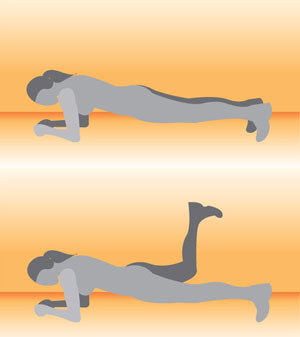
      sliding plank exercises (shown below)
      We partnered up for contact punches and kicks while alternating the drills listed above.
      In martial arts there are two forms: hard and soft. Soft form
      soft forms philosophy is derived from pure yin and it tends to yield force where Hard technique meets force with force, either by directly blocking the technique with a head-on force or by cutting through at an angle with one's own force. 


      so what is mauy thai?
      mauy thai is a form of HARD martial arts. 


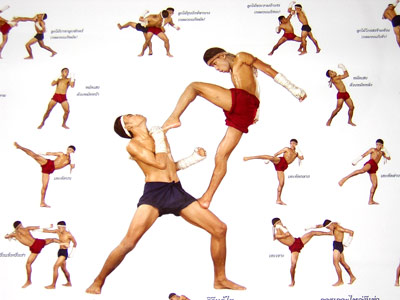
      • Muay Thai practitioners calcify their shins in order to hit harder, overpower blocking techniques, check incoming kicks, and attempt to break the bones of their opponents. 
      • Muay Thai is referred to as the "Art of Eight Limbs" because it makes use of punches, kicks, elbows and knee strikes, thus using eight "points of contact", as opposed to "two points" (fists) in Western boxing and "four points" (hands and feet) used in sport-oriented martial arts.

      Darryl started the class with a ritual which was to stand in a line and bow followed by taking a boxer stance with your guards up. We ended class with this same quick practice. This ritual reminded me of traditional yoga classes which start with an om or a chant, and end with shavasana (shown below.) I respect practices that are spiritually bound, and i recognize the deep roots within this martial arts practice. 

      so now you try! You don't have to be a member to check this class out. Call hype for details