Showing posts with label food. Show all posts

Monday, February 7, 2011

blog #111 Swap this for that and save some calories

While interning for Keri Gans this past week she asked me to help her find some good food swaps to save calories. My favorite swap is something that she often tweets (and I recently tried and love!)

When you eat an occasional bagel (whole wheat of course) ask for hummus opposed to cream cheese. To save on your carb count ask for a scooped bagel and/or only eat half.
 hummus for cream cheese on bagel (one table spoon)
hummus-27 calories, 12 calories in fat
cream cheese-51 calories total and 46 in fat


When eating sushi keep your protein choices lean; therefore no spicy sauce or twice dipped rolled. Stick with salmon, tuna and yellow tail. Dragon rolls (made with eel) have more calories and a higher fat content. (salmon is the good fat omega 3s)

eel for salmon-(3 oz comparison)
ell has high fat where salmon has omega 3 fats
eel-156 calories, 89 calories in fat
salmon 99 calores, 26 from fat


Hungry after lunch and before dinner? Skip a muffin and eat some nuts

banana nut muffin vs. almonds (one oz vs one muffin)
almonds- 163 calories, 126 in fat (good fat source) 6 grams of carbs
banana nut muffin-220 calories, 40 from fat, but 38 grams of carbs
  
Eat fish a few times a week to keep your calorie count in check:
beef top serloin vs. white fish (one piece)
cod fish-189 calories, 14 from fat
beef-497 calories, 149 from fat

Thursday, September 2, 2010

blog #101 I recommend grocery-shoping by color to add variety to your diet

Consider: When grocery shopping in the produce section, stop fretting over which vegetables and fruits to purchase, just buy by color.
Think: green, blue, purple, red, orange, yellow, white. 

For example:

green: romaine, zucchinis, cucumbers, broccoli, asparagus, bell peppers

blue: blueberries

purple: eggplant, purple grapes, purple cabbage, purple onions

red: tomatoes, watermelons, beets, strawberries, apples, red grapes

orange: cantaloupe, oranges, peaches, carrots

yellow: yellow bell peppers, golden apples

white: bananas, mushrooms, cauliflower, scallions, onions

So, instead of trying to remember every vitamin, mineral, and “nutritional opportunity” of every piece of produce, opt for the color variety. Most likely, every nutritional goal will be met through this method. 


Do you tend to stick to one color? Why? What color is that?

For a detailed list of produce by color, plus what nutrients you’ll be getting by “eating a rainbow,” check this out

pick different colors in your salad:

Wednesday, August 18, 2010

blog #99 Oatmeal: benefits and where you can get a cheap bowl before 10am

One serving of oats is 150 calories, with 25 calories coming from fat.

Oatmeal is a whole-grain cereal

Instant oatmeal and old-fashioned oatmeal are both whole grains (but the old fashioned version is a better option due to less processing.) 


“Oatmeal has a high satiety value, which means it helps fill you up and keeps you full. Research shows that oatmeal is more filling than some other breakfast foods such as bread, eggs and yogurt.”

Whole Foods offers an amazing bowl of oatmeal before 10am for just $2.17.

The oatmeal bar is set up in a buffet style so you can select your topping (like a salad bar, but for oats). For just $2.17 you can pick unlimited toppings.
Tips:
-Choose real fruit, not dried
-Limit the granola or other cereal toppings, unless you pour less oatmeal into your bowl (because your carb count will increase rapidly)
-Limit the nuts topping option (some are good, too much adds excessive calories and fat)
-Just like when buying packaged foods, compare the labels. At Whole Foods, they offer plain oats or oats made with fruit, but there’s a catch! In the ingredients posted above the hot cereal, you’ll see half and half listed in the oats made with fruit. If you are trying to maintain/lose weight, chose the oats with fewer ingredients (and no fatty dairy!), and add fresh fruit for more flavor. 


Tuesday, August 17, 2010

blog #98 Healthier pesto recipes


I stumbled across an article that mentioned something that stuck with me:

“Adjust the ingredients to your taste”

I’m a huge fan of this philosophy and I make soups with no recipe at all — I like to throw in a little bit of this and a little bit of whatever from my refrigerator.

Pesto is a sauce made from basil. Basil extract has been reported to have antioxidant activity. 


Generally, pesto includes:

Basil
Salt
Olive oil
Pine nuts
Cheese (parmesean)
Garlic


Check out this typical recipe:


I liked this article that suggests altering pesto to your needs:

This recipe calls for:
2 cups fresh basil leaves, packed
1/2 cup freshly grated Parmesan-Reggiano or Romano cheese
1/2 cup extra virgin olive oil
1/3 cup pine nuts or walnuts
3 medium sized garlic cloves, minced
Salt and freshly ground black pepper to taste


My recipe doesn’t include garlic or cheese, and instead of pine nuts I used almonds. Why not? It tastes just as good and I saved money on the nuts (pine nuts are pricy) and calories on the cheese.


It’s really hard to estimate how many calories are in pesto you get at a restaurant because it depends what it’s made with and mostly how much oil is used. Since the oil content is unknown when dining out, perhaps opting out of pesto as a topping is a good option.

Less oil, elimination of cheese, and less nuts can yield a lower calorie sauce.

Remember a little pesto goes a long way. Enjoy.

What I like pesto on/in:
Eggs/omelet
Soups
Salads (instead of dressing)
Rice or whole grain noodles
Quinoa
Steamed veggies like broccoli or tomatoes

Because pesto is made from simple chopping or pureeing ingredients together, it is considered a “raw food.”

Friday, August 13, 2010

blog #97 Skinny girl Margarita

Who doesn’t love a margarita?
I know that I do. But I don’t prefer the calories that usually come with the decadent cocktail. Unless it’s a special occasion, I try to keep my cocktails and beverage consumption low-cal. Read my other cocktail post

I was at a food-writing workshop offered at CUNY’s school of journalism this week, and the professor talked about the beverage craze, and how being a connoisseur of wine or cocktails is a new trend. Mixology is on the rise.  After all look how popular drinks such as cosmos and martinis have become?

I saw an interview this week with the very popular Bethenny Frankel from the Real Housewives of NYC. She has a health and fitness section on her site as well as a book out. Here is a tip about choosing lower calorie wines:


How To Switch Wines
"Like most women, I used to be a chardonnay person.  A great way to lighten things up is to switch to a pinot grigio or a sauvignon blanc.  These are lighter, less sweet wines that lend themselves to drinking more slowly; they’re less sugary and seem to lead to less of a hangover."


Although Bethenny offers a slew of low-calorie cocktail recipes (such as Lychee Martinis, Skinnygirl Big Apple, Skinnygirl American “Virgin,” Belmont Skinnygirl, Skinnygirl Gin Julep ), the Skinnygirl Margarita is really popular, and it has only 100 calories. 


Skinnygirl Margarita recipe:

2 oz of Clear Premium Tequila (count 1, 2 while you pour, no need for measuring)
Tiny splash of Orange Liquor
Juice of 4 Fresh Lime Wedges

To serve on the rocks, combine all ingredients over a glass of ice and garnish with a lime wedge.

Thursday, August 12, 2010

blog #96 The breakdown of choosing a healthy, discount salad

Cafe Metro is offering salads with unlimited toppings for $6 this month when you order online. 


Because not all salads are healthy, I took a look at the options to give you my recommendations for a lunch that packs the most nutrition. In the metro cafe online selection process here are the choices:

"favorite greens"
Baby Spinach 
Crispy Romaine 
Organic Field Greens 

All options are good picks, but spinach provides a great deal of nutrients and vitamins such as vitamin A, C and iron. Spinach is very nutrient dense
(check out my nutrient density post.)

Choose A Free Main Ingredient:
Crispy, Thai and Buffalo chicken are loaded with extra calories because of the sauce (and crispy is a more gentle way of saying "FRIED.") If you choose tuna, make sure that there is no mayo. Choose the leanest meat with the least amount of sauce.

Choose Up To Two Additional Main Ingredients:
Unless you are opting out of meat, cheese is not the best option. Also, nuts contain healthy-for-you monounsaturated fats, but they also are loaded with calories. In this section, why not choose egg whites and mushrooms? Or artichoke hearts?

Here’s where the deal comes in...
Pick As Many Toppings As You Like:
I want to preface this section by stating that toppings high in water content like cucumbers and tomatoes will be lower in calories and higher in nutrient density. Choose real fruit and not dried fruit (for less sugar), beans instead of sesame noodles, and fresh veggies instead of something canned (if possible).

Last but not least, the potentially deadly salad dressing options.
Choose a Homemade Salad Dressing:
I will cover this more extensively in another post coming soon, but my favorite general tip is to order dressing on the side (for portion control). Metro does have this as an option. 


Choose wisely and enjoy!

Any readers have tips to share? What are your salad topping picks?

Tuesday, July 27, 2010

blog # 92 Peanut butter: a super sports food!

Peanut butter is perhaps my favorite food in the whole world; it is amazing alone and as a spread. Peanuts contain monounsaturated (heart-healthy) fats, but of course you have to measure how much you consume because a little of this delicious spread goes a long, long way.


FUN peanut butter facts:

• Contains monounsaturated fats and resveratrol (which may protect against a high risk of cardiovascular disease)

• Is a vegetarian source of protein (so if you are NOT a vegetarian, remember to consider how much other protein you are consuming in your diet if and when you eat pb)

• Contains fiber (as much as a half cup of broccoli per one serving of pb)

• Studies show that small amounts (measure!) can help people lose weight because of satiety factor

(Satiety factor=feeling full longer from eating certain foods like pb)

Like hummus and dates, there are many different types of peanut butter. Natural, salted, unsalted, flavored, crunchy, and creamy are just a few types that we may be familiar with seeing at stores and health food shops. I recommend the natural, unsalted type because it usually has minimal preservatives. You can always add your own salt or honey to the mix at the end, but it’s always best to purchase the product with the least amount of processing. I understand that selecting the correct type can be mind boggling, so check out this article for some guidance.

Or why not make your own?

A very famous sports dietitan Nancy Clark, MS, RD has written many books about sports training and nutrition.

Clark calls peanut butter “a super sports food.”

Clark says, “In this day and age of energy bars, protein powders, and weight gain shakes, many athletes forget about "real" foods, such as peanut butter. Peanut butter, in my opinion, is one of the best sports foods around. It's tasty, inexpensive, satisfying, nourishing--and even good for our health.”


So how do my readers enjoy their peanut butter?

Classic pb&j?

Apple slices?

Bananas?

Rice cakes?

Yogurt? (it’s good--try it!)

Homemade protein bars?

Smoothies?

Those of you who know me personally can say that I am obsessed with peanut butter in my oatmeal. Peanut butter mixed right inside of my warm old fashioned oats makes for a satiating meal. PB is a great way to add flavor but remember….a teaspoon goes a long way, so measure up!

Thursday, July 15, 2010

blog # 90 Hummus anyone?

yum!

Every day while in Israel I ate hummus, as it was offered at every meal. I was even served a cup on the plane. A cup?? (That’s a lot of hummus!)

I cup= 435 calories
190 calories from fat 

1 tablespoon= 27 calories 
12 calories from fat 

Hummus has to be one of my favorite things to eat. You can eat it with pretty much anything. Of course, Israel had the best hummus that I have ever tasted, so I did some research that I want to share.

You can purchase hummus at most stores, but why not make it at home? Here is an at-home recipe

Although recipes vary, hummus basically consists of chickpeas, olive oil, and tahini paste. Some of my readers may wonder, what is tahini?

Tahini is sesame-seed paste that can either be purchased fresh or hydrated.

There are two types of tahini: light and dark. The light version is said to have a better flavor. 

Although I’ve never tried, I’ve been told that if you are making hummus at home and you don’t have tahini, you can use peanut butter instead. Anyone tried that?
What do you eat with hummus?

I like:
Raw veggies
Pitas
Salads (as a suppliment of the dressing)


I like this brand because there is such a wide variety of flavors like roasted pepper, roasted garlic, plain, spicy, and roasted pine nuts. 


About six months ago I went to the Hummus Kitchen here in NYC which i really liked. Check it out!


Want to learn more? Read up on the hummus blog

Wednesday, July 14, 2010

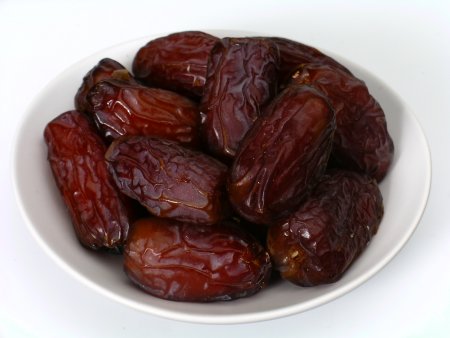
blog #89 What do you know about the date fruit in Israel?

I recently returned from my amazing birthright trip to Israel.


Israel is described as having “one of the most dynamic, fascinating -- and delicious -- food scenes in the world.” 


Staple foods:
Hummus
Falafel
Olive oil
Olives
Various cheeses
Kabobs (chicken being a popular choice)
Fresh oranges
Tahini sauce
Israeli salad (cucumbers and tomatoes)
Dried fruits, such as dates


I want to talk about the dates in Israel. The date fruit is a product of a date palm, which is a tree native to northern Africa and the Middle East. A date fruit can be eaten dried or fresh. While fresh dates are offered only seasonality and at special markets, dried dates are available at most markets year-round.

Dates are loaded with fiber as well as oil, calcium, sulfur, iron, potassium, phosphorus, manganese, and magnesium. There are many different types of dates. 

Hadiklaim founded in 1983, is Israel’s largest and most advanced date producer located in Tel Aviv. I had the opportunity to try its brand -- King Solomon’s dates -- and they were the best dates that I have ever tasted in my life.

Hadiklaim has a reputation for delivering the highest quality dates because the geography and location is ideal for optimal date production.

All values are based per 100 grams (3.5 ounces) of dates

A typical date is said to be around 23 calories (read the label)
Carbohydrates - 73.5 g
Total dietary fiber - 7.5 g
Sugars - 66 g
Proteins - 2 g
Total fat - 0.45 g
Minerals:
Calcium - 32 mg
Magnesium - 35 mg
Phosphorus - 40 mg
Potassium - 652 mg


Although a typical date has only 23, calories, different types of dates vary in calories. Dates are a great choice, but in small portions.  

NOT ALL DATES ARE EQUAL!

Friday, June 4, 2010

blog #84 meat facts

To follow up on my “meat as a condiment post,” here are some interesting meat facts:

Hot dog facts:about 460 calories including bun (170 from fat)
Rib facts: 236 calories in 3 oz (182 from fat)
Lean chicken facts: 120 calories in 3 oz (14 from fat)
Turkey dog 100 calories (70 from fat)


When choosing meats, why not make healthier choices like a turkey dog opposed to a hot dog, or lean chicken breast as opposed to ribs? Or have your ribs and hot dog, but use meat as a condiment (meaning portion control)?
I gave the calories for one ounce less then one serving of ribs and chicken, but I didn’t mention the size of the hot dog because they vary. Also do you eat your hot dog plain or with toppings? Ketchup is extremely high in sugar and carbohydrates. Chilli dogs and hot dogs with cheese pack on the calories. Mustard is a better option. If you keep adding on, your hot dog will eventually look like this:


Curious what’s in a hot dog? I will answer in a future blog post. Feel free to comment!

Nutrition Facts                                                           (hot dog)
Serving Size: 1 sandwich (175.0 g)


Amount per Serving


Calories 460
Calories from Fat 170


% Daily Value *
Total Fat 18.9g
29%
    Saturated Fat  5.1g
26%
    Monounsaturated Fat  9.1g

    Polyunsaturated Fat  3.5g

Cholesterol 79mg
26%
Sodium 973mg
41%
Potassium 263mg
8%
Total Carbohydrate 55.8g
19%
    Dietary Fiber  0g
0%
    Sugars  0g

Protein 16.8g
34%


Vitamin A
4%
Calcium
102%
Iron
34%
Vitamin D
0%
Vitamin E
0%
Thiamin (B1)
0.28mg
Riboflavin (B2)
0.7mg
Niacin (B3)
4.165mg
Vitamin B6
4.4%
Folic Acid (Folate)
44mcg
Vitamin B12
7.33333333
Phosphorus
166mg
Magnesium
18mg
Panthothenic Acid
1.348mg
Zinc
8.73333333
Manganese
0.193mg


Est. Percent of Calories from:
Fat 37.0%     Carbs 48.5%
Protein 14.6%