Thursday, September 2, 2010

blog #101 I recommend grocery-shoping by color to add variety to your diet

Consider: When grocery shopping in the produce section, stop fretting over which vegetables and fruits to purchase, just buy by color.
Think: green, blue, purple, red, orange, yellow, white. 

For example:

green: romaine, zucchinis, cucumbers, broccoli, asparagus, bell peppers

blue: blueberries

purple: eggplant, purple grapes, purple cabbage, purple onions

red: tomatoes, watermelons, beets, strawberries, apples, red grapes

orange: cantaloupe, oranges, peaches, carrots

yellow: yellow bell peppers, golden apples

white: bananas, mushrooms, cauliflower, scallions, onions

So, instead of trying to remember every vitamin, mineral, and “nutritional opportunity” of every piece of produce, opt for the color variety. Most likely, every nutritional goal will be met through this method. 


Do you tend to stick to one color? Why? What color is that?
For a detailed list of produce by color, plus what nutrients you’ll be getting by “eating a rainbow,” check this out

pick different colors in your salad:

Monday, August 23, 2010

blog #100: Nutritionist vs. Registered Dietitian: the title MATTERS

“Though the public at large often uses the words dietitian and nutritionist interchangeably, they are two distinct fields.” check this out

The American Dietetic Association (ADA) website explains

“A registered dietitian is a food and nutrition expert who has met the minimum academic and professional requirements to qualify for the credential ‘R.D.’ The majority of R.D.s work in the treatment and prevention of disease (administering medical nutrition therapy, often part of medical teams), in hospitals, HMOs, private practice or other health-care facilities. In addition, a large number of R.D.s work in community and public health settings and academia and research. A growing number of R.D.s work in the food and nutrition industry, in business, journalism, sports nutrition, and corporate wellness programs.”

Anyone can call him- or herself an expert in food science or nutrition. These are “nutritionists.” You don’t even need a bachelors degree to call yourself a nutritionist.

The American Dietetic Association posts these requirements: 
-Complete a minimum of a bachelor’s degree at a U.S. regionally accredited university or college and course work accredited or approved by the Commission on Accreditation for Dietetics Education (CADE) of the American Dietetic Association (ADA).
-Complete a CADE-accredited supervised practice program at a healthcare facility, community agency, or a foodservice corporation or combined with undergraduate or graduate studies. Typically, a practice program will run six to 12 months in length.
-Pass a national examination administered by the Commission on Dietetic Registration (CDR). For more information regarding the examination, refer to CDR’s website at www.cdrnet.org
-Complete continuing professional educational requirements to maintain registration.

This doesn’t mean that advice from people who don’t have a registered dietitian license (R.D.) isn’t valid. What this means is that you should consider any advice carefully, and do your own research.

For example:
A person who likes working out, or is good at working out, isn’t a personal trainer. Maybe he or she is an expert in exercise, or think that s/he is, but without passing a certified test from an accredited institution like NASM or ACE, s/he isn’t licensed to be a personal trainer.

To be a personal trainer one must pass a test, be currently CPR-certified, and maintain the certification yearly by taking continuing education credits. If the trainer is an independent contractor (like I am), then that trainer needs liability insurance in addition to the other upkeep for their business.

Check your facts. Who are you dealing with?

I continually try and stress that labels on food matter just like credentials on your name matter. I will graduate from Hunter College this fall with my Bachelor of Science in Nutritional Science. I’m not a Registered Dietitian, or R.D. until I am accepted into a competitive hospital internship, and then I take and pass a state test. This process is long and difficult, but remember: a dietitian is different then a nutritionist.

Check out this video 


Wednesday, August 18, 2010

blog #99 Oatmeal: benefits and where you can get a cheap bowl before 10am

One serving of oats is 150 calories, with 25 calories coming from fat.

Oatmeal is a whole-grain cereal

Instant oatmeal and old-fashioned oatmeal are both whole grains (but the old fashioned version is a better option due to less processing.) 


“Oatmeal has a high satiety value, which means it helps fill you up and keeps you full. Research shows that oatmeal is more filling than some other breakfast foods such as bread, eggs and yogurt.”

Whole Foods offers an amazing bowl of oatmeal before 10am for just $2.17.

The oatmeal bar is set up in a buffet style so you can select your topping (like a salad bar, but for oats). For just $2.17 you can pick unlimited toppings.
Tips:
-Choose real fruit, not dried
-Limit the granola or other cereal toppings, unless you pour less oatmeal into your bowl (because your carb count will increase rapidly)
-Limit the nuts topping option (some are good, too much adds excessive calories and fat)
-Just like when buying packaged foods, compare the labels. At Whole Foods, they offer plain oats or oats made with fruit, but there’s a catch! In the ingredients posted above the hot cereal, you’ll see half and half listed in the oats made with fruit. If you are trying to maintain/lose weight, chose the oats with fewer ingredients (and no fatty dairy!), and add fresh fruit for more flavor. 


Tuesday, August 17, 2010

blog #98 Healthier pesto recipes


I stumbled across an article that mentioned something that stuck with me:

“Adjust the ingredients to your taste”

I’m a huge fan of this philosophy and I make soups with no recipe at all — I like to throw in a little bit of this and a little bit of whatever from my refrigerator.

Pesto is a sauce made from basil. Basil extract has been reported to have antioxidant activity. 


Generally, pesto includes:

Basil
Salt
Olive oil
Pine nuts
Cheese (parmesean)
Garlic


Check out this typical recipe:


I liked this article that suggests altering pesto to your needs:

This recipe calls for:
2 cups fresh basil leaves, packed
1/2 cup freshly grated Parmesan-Reggiano or Romano cheese
1/2 cup extra virgin olive oil
1/3 cup pine nuts or walnuts
3 medium sized garlic cloves, minced
Salt and freshly ground black pepper to taste


My recipe doesn’t include garlic or cheese, and instead of pine nuts I used almonds. Why not? It tastes just as good and I saved money on the nuts (pine nuts are pricy) and calories on the cheese.


It’s really hard to estimate how many calories are in pesto you get at a restaurant because it depends what it’s made with and mostly how much oil is used. Since the oil content is unknown when dining out, perhaps opting out of pesto as a topping is a good option.

Less oil, elimination of cheese, and less nuts can yield a lower calorie sauce.

Remember a little pesto goes a long way. Enjoy.

What I like pesto on/in:
Eggs/omelet
Soups
Salads (instead of dressing)
Rice or whole grain noodles
Quinoa
Steamed veggies like broccoli or tomatoes

Because pesto is made from simple chopping or pureeing ingredients together, it is considered a “raw food.”

Friday, August 13, 2010

blog #97 Skinny girl Margarita

Who doesn’t love a margarita?
I know that I do. But I don’t prefer the calories that usually come with the decadent cocktail. Unless it’s a special occasion, I try to keep my cocktails and beverage consumption low-cal. Read my other cocktail post

I was at a food-writing workshop offered at CUNY’s school of journalism this week, and the professor talked about the beverage craze, and how being a connoisseur of wine or cocktails is a new trend. Mixology is on the rise.  After all look how popular drinks such as cosmos and martinis have become?

I saw an interview this week with the very popular Bethenny Frankel from the Real Housewives of NYC. She has a health and fitness section on her site as well as a book out. Here is a tip about choosing lower calorie wines:


How To Switch Wines
"Like most women, I used to be a chardonnay person.  A great way to lighten things up is to switch to a pinot grigio or a sauvignon blanc.  These are lighter, less sweet wines that lend themselves to drinking more slowly; they’re less sugary and seem to lead to less of a hangover."


Although Bethenny offers a slew of low-calorie cocktail recipes (such as Lychee Martinis, Skinnygirl Big Apple, Skinnygirl American “Virgin,” Belmont Skinnygirl, Skinnygirl Gin Julep ), the Skinnygirl Margarita is really popular, and it has only 100 calories. 


Skinnygirl Margarita recipe:

2 oz of Clear Premium Tequila (count 1, 2 while you pour, no need for measuring)
Tiny splash of Orange Liquor
Juice of 4 Fresh Lime Wedges

To serve on the rocks, combine all ingredients over a glass of ice and garnish with a lime wedge.

Thursday, August 12, 2010

blog #96 The breakdown of choosing a healthy, discount salad

Cafe Metro is offering salads with unlimited toppings for $6 this month when you order online. 


Because not all salads are healthy, I took a look at the options to give you my recommendations for a lunch that packs the most nutrition. In the metro cafe online selection process here are the choices:

"favorite greens"
Baby Spinach 
Crispy Romaine 
Organic Field Greens 

All options are good picks, but spinach provides a great deal of nutrients and vitamins such as vitamin A, C and iron. Spinach is very nutrient dense
(check out my nutrient density post.)

Choose A Free Main Ingredient:
Crispy, Thai and Buffalo chicken are loaded with extra calories because of the sauce (and crispy is a more gentle way of saying "FRIED.") If you choose tuna, make sure that there is no mayo. Choose the leanest meat with the least amount of sauce.

Choose Up To Two Additional Main Ingredients:
Unless you are opting out of meat, cheese is not the best option. Also, nuts contain healthy-for-you monounsaturated fats, but they also are loaded with calories. In this section, why not choose egg whites and mushrooms? Or artichoke hearts?

Here’s where the deal comes in...
Pick As Many Toppings As You Like:
I want to preface this section by stating that toppings high in water content like cucumbers and tomatoes will be lower in calories and higher in nutrient density. Choose real fruit and not dried fruit (for less sugar), beans instead of sesame noodles, and fresh veggies instead of something canned (if possible).

Last but not least, the potentially deadly salad dressing options.
Choose a Homemade Salad Dressing:
I will cover this more extensively in another post coming soon, but my favorite general tip is to order dressing on the side (for portion control). Metro does have this as an option. 


Choose wisely and enjoy!

Any readers have tips to share? What are your salad topping picks?

Monday, August 9, 2010

blog #95 Why I love the treadmill

Environment-
While I love running outside, the treadmill is in a consistent environment. You can’t make weather excuses for skipping a workout with the treadmill. And some treadmills even have TVs for entertainment distraction.

Consistency-
Unlike outside where the terrain can be different, the treadmill is always a soft band that your shoes (and knees) are familiar with.

Control-
You set the pace (fast or slow) and incline (steep or just one percent). Outside you can do stadium runs up and down stairs (my favorite) or flat-land runs, but the treadmill allows you to manipulate a multi-faceted training approach all in one machine without scheduling a creative trail run.

Cross training-
The treadmill isn’t just for weight loss. If you utilize all functionalities of the treadmill, you can burn fat, but you can also preserve muscle (by walking/brisk jogging at an incline). One of my favorite ways to use the treadmill is with circuit training. I have some of my clients use the treadmill for a couple minutes then alternate to other exercises to keep heart rates up, which builds endurance.

Beginner plan for utilizing the treadmill in a circuit (an example):

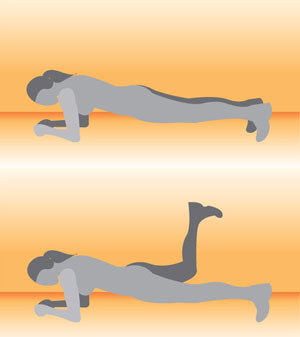
  •       Plank for 30 to 60 seconds
  •       Slow squats with body weight for 1.5 minutes
  •       Push ups on toes until body fails, then on knees for 1.5 minutes
  •       2 minutes of brisk walking (3.8 to 4.0 MPH) on eight percent incline
  •    1 minute of jogging on one-percent incline at 6.5 MPH

      Friday, August 6, 2010

      blog #94 trend on the rise: baby food diet for adults?!

      check out this video

      While doing some of my usual food/health and nutrition research, I came across this video and felt compelled to post about it. 

      The baby food diet is said to be created by celebrity trainer Tracy Anderson. The diet involves eating 14
      servings of baby food a day followed by a healthy adult dinner. "I developed a cleanse where you can still eat and it's a lot of puree foods. I was very careful about the foods I chose to put in it," Tracy told.


      A 6 oz jar labeled 'Third-Stage Foods' contains:


      Calories 110, 

Fat 0g, 

Total Carb 25g
, Fiber 2g, 
Sugars 15g

, Protein 1g
      I have heard of ...

      "The Baby Food Diet is likely to inspire some good chuckles and grimaces as its popularity grows. From a nutritional perspective, the diet is clearly packed with veggies and fruits and thereby full of vitamins and minerals; and it does have the portion control element going for it too. As for its long-term ability to keep off any lost pounds? That still remains to be seen."

      Want more info?  check this out

      So How do you reach your goals the right way?

      Follow a healthy lifestyle and document what you eat. I know it’s a pain to keep track of, but it really makes you aware of what foods might be sabotaging your weight loss. I heard a dietitian say on the Tyra Banks show a few months back say: 

      "If you bite it; write it."

      I like that. Catchy. I recommend keeping a digital log. Why not try a smartphone application? Check out my blog post about smartphone apps that help you manage your calorie consumption.

      Wednesday, August 4, 2010

      blog #93 treadmill rules


      1. ALWAYS walk/jog/run at a one-percent incline at least. 

      2. NEVER hold on to the treadmill. Keep your arms moving (no hands on hips, NO HANDS ON TREADMILL)

      3. Running or jogging for 30 minutes is equivalent to walking for an hour

      4. A brisk walk or light jog at a high incline really focuses on the back of the legs (hamstrings).

      5. It’s OK to take breaks and try intervals (which are great for fat loss), such as running at a one-percent incline and then brisk jogging at an eight-percent incline.

      Why?

      1. Moving on the treadmill with at least a one-percent incline is most similar to real life. Anything under that is more like walking at a decline.
      (check out this abstract)

      check out this article from runner's world: 
      “Research has shown that when you set the treadmill at a 1-2% incline, it will simulate the "intensity" of outdoor running (make up for the lack of wind resistance in outdoor running). “

      I recommend increasing the incline and manipulating your speed to optimize your workout.

      2. You are not burning optimal calories if you are hanging onto the treadmill. Decrease the speed/incline, or stop and take a break, but DON’T HANG ON. 
      You burn more calories when you move more body parts, so pump those arms! The faster your arms move, the faster your lower body moves too. Try it. (please read my former cardio post

      3. Walking is great exercise and should not be discounted. However, you have to walk twice as long to reap equivalent benefits of running.

      4. A lot of bodybuilders and athletes trying to preserve muscle do this high-incline running, because it strengthens the hamstrings (back of thighs), which tend to be less developed than the quadriceps (front of the thighs).

      5. I’d rather my client take a break then hang onto the machine. Mix up your workout constantly and cross-train.


      Tuesday, July 27, 2010

      blog # 92 Peanut butter: a super sports food!

      Peanut butter is perhaps my favorite food in the whole world; it is amazing alone and as a spread. Peanuts contain monounsaturated (heart-healthy) fats, but of course you have to measure how much you consume because a little of this delicious spread goes a long, long way.


      FUN peanut butter facts:

      • Contains monounsaturated fats and resveratrol (which may protect against a high risk of cardiovascular disease)

      • Is a vegetarian source of protein (so if you are NOT a vegetarian, remember to consider how much other protein you are consuming in your diet if and when you eat pb)

      • Contains fiber (as much as a half cup of broccoli per one serving of pb)

      • Studies show that small amounts (measure!) can help people lose weight because of satiety factor

      (Satiety factor=feeling full longer from eating certain foods like pb)

      Like hummus and dates, there are many different types of peanut butter. Natural, salted, unsalted, flavored, crunchy, and creamy are just a few types that we may be familiar with seeing at stores and health food shops. I recommend the natural, unsalted type because it usually has minimal preservatives. You can always add your own salt or honey to the mix at the end, but it’s always best to purchase the product with the least amount of processing. I understand that selecting the correct type can be mind boggling, so check out this article for some guidance.

      Or why not make your own?

      A very famous sports dietitan Nancy Clark, MS, RD has written many books about sports training and nutrition.

      Clark calls peanut butter “a super sports food.”

      Clark says, “In this day and age of energy bars, protein powders, and weight gain shakes, many athletes forget about "real" foods, such as peanut butter. Peanut butter, in my opinion, is one of the best sports foods around. It's tasty, inexpensive, satisfying, nourishing--and even good for our health.”


      So how do my readers enjoy their peanut butter?

      Classic pb&j?

      Apple slices?

      Bananas?

      Rice cakes?

      Yogurt? (it’s good--try it!)

      Homemade protein bars?

      Smoothies?

      Those of you who know me personally can say that I am obsessed with peanut butter in my oatmeal. Peanut butter mixed right inside of my warm old fashioned oats makes for a satiating meal. PB is a great way to add flavor but remember….a teaspoon goes a long way, so measure up!

      Saturday, July 17, 2010

      blog #91: Lululemon’s complimentary yoga class


      This past weekend I finally made it to a free yoga class at Lululemon on E. 66th and Third Ave. This isn’t just a one-time free class -- it’s offered every weekend, so I encourage anyone who lives near a Lululemon location to check out the schedule at their local store.

      What is Lululemon?
      Lululemon’s first studio, a store offering athletic apparel, opened in 1998 in Vancouver. There are now more than 100 locations in the U.S., Canada, Australia, China, and more.

      The Yoga Class
      The class was offered inside the clothing store, and the space was neat and tidy. Mats were laid out among the clothing displays. The class was overcrowded (it’s free, after all), but the instructor was great . The class was a level 1 vinyasa class so beginners were welcome as well as more advanced yogis. The instructor did a good job at demonstrating various levels of the poses.  The room was packed with practitioners of all levels from beginners to. There were also a handful of men in attendance. Overall, it was a good experience.


      Read more about yoga on Lululemn’s site or check this out


      Thursday, July 15, 2010

      blog # 90 Hummus anyone?

      yum!

      Every day while in Israel I ate hummus, as it was offered at every meal. I was even served a cup on the plane. A cup?? (That’s a lot of hummus!)

      I cup= 435 calories
      190 calories from fat 

      1 tablespoon= 27 calories 
      12 calories from fat 

      Hummus has to be one of my favorite things to eat. You can eat it with pretty much anything. Of course, Israel had the best hummus that I have ever tasted, so I did some research that I want to share.

      You can purchase hummus at most stores, but why not make it at home? Here is an at-home recipe

      Although recipes vary, hummus basically consists of chickpeas, olive oil, and tahini paste. Some of my readers may wonder, what is tahini?

      Tahini is sesame-seed paste that can either be purchased fresh or hydrated.

      There are two types of tahini: light and dark. The light version is said to have a better flavor. 

      Although I’ve never tried, I’ve been told that if you are making hummus at home and you don’t have tahini, you can use peanut butter instead. Anyone tried that?
      What do you eat with hummus?

      I like:
      Raw veggies
      Pitas
      Salads (as a suppliment of the dressing)


      I like this brand because there is such a wide variety of flavors like roasted pepper, roasted garlic, plain, spicy, and roasted pine nuts. 


      About six months ago I went to the Hummus Kitchen here in NYC which i really liked. Check it out!


      Want to learn more? Read up on the hummus blog

      Wednesday, July 14, 2010

      blog #89 What do you know about the date fruit in Israel?

      I recently returned from my amazing birthright trip to Israel.


      Israel is described as having “one of the most dynamic, fascinating -- and delicious -- food scenes in the world.” 


      Staple foods:
      Hummus
      Falafel
      Olive oil
      Olives
      Various cheeses
      Kabobs (chicken being a popular choice)
      Fresh oranges
      Tahini sauce
      Israeli salad (cucumbers and tomatoes)
      Dried fruits, such as dates


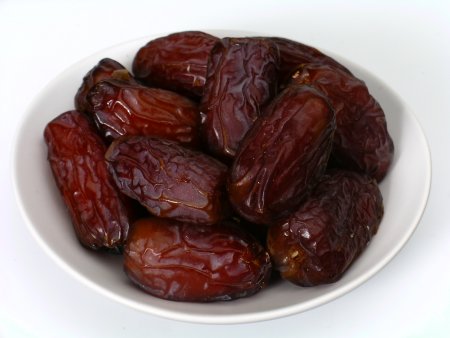
      I want to talk about the dates in Israel. The date fruit is a product of a date palm, which is a tree native to northern Africa and the Middle East. A date fruit can be eaten dried or fresh. While fresh dates are offered only seasonality and at special markets, dried dates are available at most markets year-round.

      Dates are loaded with fiber as well as oil, calcium, sulfur, iron, potassium, phosphorus, manganese, and magnesium. There are many different types of dates. 

      Hadiklaim founded in 1983, is Israel’s largest and most advanced date producer located in Tel Aviv. I had the opportunity to try its brand -- King Solomon’s dates -- and they were the best dates that I have ever tasted in my life.

      Hadiklaim has a reputation for delivering the highest quality dates because the geography and location is ideal for optimal date production.

      All values are based per 100 grams (3.5 ounces) of dates

      A typical date is said to be around 23 calories (read the label)
      Carbohydrates - 73.5 g
      Total dietary fiber - 7.5 g
      Sugars - 66 g
      Proteins - 2 g
      Total fat - 0.45 g
      Minerals:
      Calcium - 32 mg
      Magnesium - 35 mg
      Phosphorus - 40 mg
      Potassium - 652 mg


      Although a typical date has only 23, calories, different types of dates vary in calories. Dates are a great choice, but in small portions.  

      NOT ALL DATES ARE EQUAL!

      Wednesday, June 16, 2010

      blog #88 Where am I for the next 10 days? Medical Birthright in Israel

      I was accepted for the “Medical Students Mifgash Experiencesponsored in partnership with American Physicians Fellowship for Medicine in Israel, taking place from  June 17-28 2010.

      Check out the video

      “The American Physicians Fellowship, established in 1950, is a non-profit organization dedicated to advancing the state of medical education, research, and health care in Israel. The ‘Medical Students Mifgash Experience’ pairs American health professionals for all 10 days of the program in Israel. Highlights include participation in field-training exercises, military medic simulations, and opportunities to network with Israeli physicians of all backgrounds. It's a special way to experience Israel and deepen ties with your Israeli colleagues.”


      I am excited to visit a new country and meet new people, but I’m mostly excited for the clinical component of this trip because it is specifically aimed at Med/Health students. As an aspirating Registered Dietitian (I graduate with my bachelor in science this fall), I will receive an invaluable experience observing the practices in Israel and then cross-comparing them with the clinical settings here in America. When I return to volunteer at New York Presbyterian hospital in July, I will have a deeper understanding and appreciation of the clinical settings.  

      Tuesday, June 15, 2010

      blog #87 Lecture at John Jay College about anaerobic vs. aerobic training

      Last week I was a guest speaker at John Jay College in Manhattan. I was asked to speak about any topic relating to exercise in professor Meredith Sobel’s Physical Education class. I also showed the students some basic stretches and body weight exercises that can be performed almost anywhere without the use of equipment.

      My topic was the very basic differences of anaerobic vs. aerobic training

      Anerobic=heavy or moderate lifting from dumbbells or barbells. These are movements like dead lifts, and power exercises like clean and press (requiring short bursts of energy or limited oxygen)

      Aerobic=long, sustained exercises like running or jogging (requiring stamina and the presence of oxygen)

      1.      Anaerobic exercises use resistance so that you will also be building muscle, plus bone as an added benefit.
      2.      Aerobic exercise will have more of an impact on the cardiovascular and circulatory system.
      3.      Combining the two would give the greatest health benefits.


      Examples of anaerobic exercise include: heavy weightlifting, any type of sprint (running, biking, swimming, etc.), jumping rope, hill climbing, interval training, isometrics, or any rapid burst of hard exercise. 

      What are the Benefits of Anaerobic Exercise? 
      Anaerobic exercise uses your muscles at a high intensity for a short period of time. As a result, it can help:
      ·         Develop stronger muscles
      ·         Improve your VO2 max (the highest amount of oxygen one can consume during exercise) and thus improve your     cardio-respiratory fitness
      ·         Increase your capacity to withstand the buildup of waste substances (such as lactic acid) and  remove them from the  body. This means your endurance and ability to fight fatigue will improve.

      Aerobic exercise is recommended for weight loss initially. General guidelines suggest 30 to 45 minutes of aerobics with moderate-to-high intensity three to five times a week. Examples include:
      1.      Walking
      2.      Jogging
      3.      Cycling
      4.      Treadmill

      Because some of the students in this class lead a sedentary lifestyle, Professor Sobel added that doing a little bit of physical activity every day is better than nothing. Taking the stairs and getting out the subway one station earlier can help a sedentary person increase their level of endurance. Lastly, she recommended focusing on the guideline that even a 10 percent body weight loss is a great feat.

      If you are sedentary, it is recommended to start with aerobic exercises and then incrementally add in anerobic exercises to optimize your level of fitness.
      I recommend reading this article

      “Physical fitness is a compromise of cardiorespiratory endurance, strength, flexibility, power, speed, coordination, agility, balance, accuracy and toughness.

      This article stresses, “Instead of aerobic vs. anaerobic it should be aerobic and anaerobic!
       What are you doing in your routine to add both cardio (aerobic) and strength (anaerobic)?