Tuesday, July 27, 2010

blog # 92 Peanut butter: a super sports food!

Peanut butter is perhaps my favorite food in the whole world; it is amazing alone and as a spread. Peanuts contain monounsaturated (heart-healthy) fats, but of course you have to measure how much you consume because a little of this delicious spread goes a long, long way.


FUN peanut butter facts:

• Contains monounsaturated fats and resveratrol (which may protect against a high risk of cardiovascular disease)

• Is a vegetarian source of protein (so if you are NOT a vegetarian, remember to consider how much other protein you are consuming in your diet if and when you eat pb)

• Contains fiber (as much as a half cup of broccoli per one serving of pb)

• Studies show that small amounts (measure!) can help people lose weight because of satiety factor

(Satiety factor=feeling full longer from eating certain foods like pb)

Like hummus and dates, there are many different types of peanut butter. Natural, salted, unsalted, flavored, crunchy, and creamy are just a few types that we may be familiar with seeing at stores and health food shops. I recommend the natural, unsalted type because it usually has minimal preservatives. You can always add your own salt or honey to the mix at the end, but it’s always best to purchase the product with the least amount of processing. I understand that selecting the correct type can be mind boggling, so check out this article for some guidance.

Or why not make your own?

A very famous sports dietitan Nancy Clark, MS, RD has written many books about sports training and nutrition.

Clark calls peanut butter “a super sports food.”

Clark says, “In this day and age of energy bars, protein powders, and weight gain shakes, many athletes forget about "real" foods, such as peanut butter. Peanut butter, in my opinion, is one of the best sports foods around. It's tasty, inexpensive, satisfying, nourishing--and even good for our health.”


So how do my readers enjoy their peanut butter?

Classic pb&j?

Apple slices?

Bananas?

Rice cakes?

Yogurt? (it’s good--try it!)

Homemade protein bars?

Smoothies?

Those of you who know me personally can say that I am obsessed with peanut butter in my oatmeal. Peanut butter mixed right inside of my warm old fashioned oats makes for a satiating meal. PB is a great way to add flavor but remember….a teaspoon goes a long way, so measure up!

Saturday, July 17, 2010

blog #91: Lululemon’s complimentary yoga class


This past weekend I finally made it to a free yoga class at Lululemon on E. 66th and Third Ave. This isn’t just a one-time free class -- it’s offered every weekend, so I encourage anyone who lives near a Lululemon location to check out the schedule at their local store.

What is Lululemon?
Lululemon’s first studio, a store offering athletic apparel, opened in 1998 in Vancouver. There are now more than 100 locations in the U.S., Canada, Australia, China, and more.

The Yoga Class
The class was offered inside the clothing store, and the space was neat and tidy. Mats were laid out among the clothing displays. The class was overcrowded (it’s free, after all), but the instructor was great . The class was a level 1 vinyasa class so beginners were welcome as well as more advanced yogis. The instructor did a good job at demonstrating various levels of the poses.  The room was packed with practitioners of all levels from beginners to. There were also a handful of men in attendance. Overall, it was a good experience.


Read more about yoga on Lululemn’s site or check this out


Thursday, July 15, 2010

blog # 90 Hummus anyone?

yum!

Every day while in Israel I ate hummus, as it was offered at every meal. I was even served a cup on the plane. A cup?? (That’s a lot of hummus!)

I cup= 435 calories
190 calories from fat 

1 tablespoon= 27 calories 
12 calories from fat 

Hummus has to be one of my favorite things to eat. You can eat it with pretty much anything. Of course, Israel had the best hummus that I have ever tasted, so I did some research that I want to share.

You can purchase hummus at most stores, but why not make it at home? Here is an at-home recipe

Although recipes vary, hummus basically consists of chickpeas, olive oil, and tahini paste. Some of my readers may wonder, what is tahini?

Tahini is sesame-seed paste that can either be purchased fresh or hydrated.

There are two types of tahini: light and dark. The light version is said to have a better flavor. 

Although I’ve never tried, I’ve been told that if you are making hummus at home and you don’t have tahini, you can use peanut butter instead. Anyone tried that?
What do you eat with hummus?

I like:
Raw veggies
Pitas
Salads (as a suppliment of the dressing)


I like this brand because there is such a wide variety of flavors like roasted pepper, roasted garlic, plain, spicy, and roasted pine nuts. 


About six months ago I went to the Hummus Kitchen here in NYC which i really liked. Check it out!


Want to learn more? Read up on the hummus blog

Wednesday, July 14, 2010

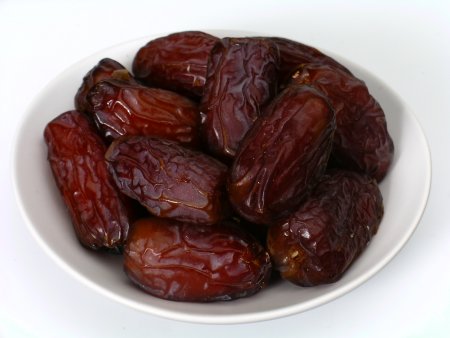
blog #89 What do you know about the date fruit in Israel?

I recently returned from my amazing birthright trip to Israel.


Israel is described as having “one of the most dynamic, fascinating -- and delicious -- food scenes in the world.” 


Staple foods:
Hummus
Falafel
Olive oil
Olives
Various cheeses
Kabobs (chicken being a popular choice)
Fresh oranges
Tahini sauce
Israeli salad (cucumbers and tomatoes)
Dried fruits, such as dates


I want to talk about the dates in Israel. The date fruit is a product of a date palm, which is a tree native to northern Africa and the Middle East. A date fruit can be eaten dried or fresh. While fresh dates are offered only seasonality and at special markets, dried dates are available at most markets year-round.

Dates are loaded with fiber as well as oil, calcium, sulfur, iron, potassium, phosphorus, manganese, and magnesium. There are many different types of dates. 

Hadiklaim founded in 1983, is Israel’s largest and most advanced date producer located in Tel Aviv. I had the opportunity to try its brand -- King Solomon’s dates -- and they were the best dates that I have ever tasted in my life.

Hadiklaim has a reputation for delivering the highest quality dates because the geography and location is ideal for optimal date production.

All values are based per 100 grams (3.5 ounces) of dates

A typical date is said to be around 23 calories (read the label)
Carbohydrates - 73.5 g
Total dietary fiber - 7.5 g
Sugars - 66 g
Proteins - 2 g
Total fat - 0.45 g
Minerals:
Calcium - 32 mg
Magnesium - 35 mg
Phosphorus - 40 mg
Potassium - 652 mg


Although a typical date has only 23, calories, different types of dates vary in calories. Dates are a great choice, but in small portions.  

NOT ALL DATES ARE EQUAL!

Wednesday, June 16, 2010

blog #88 Where am I for the next 10 days? Medical Birthright in Israel

I was accepted for the “Medical Students Mifgash Experience” sponsored in partnership with American Physicians Fellowship for Medicine in Israel, taking place from  June 17-28 2010.

Check out the video

“The American Physicians Fellowship, established in 1950, is a non-profit organization dedicated to advancing the state of medical education, research, and health care in Israel. The ‘Medical Students Mifgash Experience’ pairs American health professionals for all 10 days of the program in Israel. Highlights include participation in field-training exercises, military medic simulations, and opportunities to network with Israeli physicians of all backgrounds. It's a special way to experience Israel and deepen ties with your Israeli colleagues.”


I am excited to visit a new country and meet new people, but I’m mostly excited for the clinical component of this trip because it is specifically aimed at Med/Health students. As an aspirating Registered Dietitian (I graduate with my bachelor in science this fall), I will receive an invaluable experience observing the practices in Israel and then cross-comparing them with the clinical settings here in America. When I return to volunteer at New York Presbyterian hospital in July, I will have a deeper understanding and appreciation of the clinical settings.  

Tuesday, June 15, 2010

blog #87 Lecture at John Jay College about anaerobic vs. aerobic training

Last week I was a guest speaker at John Jay College in Manhattan. I was asked to speak about any topic relating to exercise in professor Meredith Sobel’s Physical Education class. I also showed the students some basic stretches and body weight exercises that can be performed almost anywhere without the use of equipment.

My topic was the very basic differences of anaerobic vs. aerobic training

Anerobic=heavy or moderate lifting from dumbbells or barbells. These are movements like dead lifts, and power exercises like clean and press (requiring short bursts of energy or limited oxygen)

Aerobic=long, sustained exercises like running or jogging (requiring stamina and the presence of oxygen)

1.      Anaerobic exercises use resistance so that you will also be building muscle, plus bone as an added benefit.
2.      Aerobic exercise will have more of an impact on the cardiovascular and circulatory system.
3.      Combining the two would give the greatest health benefits.


Examples of anaerobic exercise include: heavy weightlifting, any type of sprint (running, biking, swimming, etc.), jumping rope, hill climbing, interval training, isometrics, or any rapid burst of hard exercise. 

What are the Benefits of Anaerobic Exercise? 

Anaerobic exercise uses your muscles at a high intensity for a short period of time. As a result, it can help:
·         Develop stronger muscles
·         Improve your VO2 max (the highest amount of oxygen one can consume during exercise) and thus improve your     cardio-respiratory fitness
·         Increase your capacity to withstand the buildup of waste substances (such as lactic acid) and  remove them from the  body. This means your endurance and ability to fight fatigue will improve.

Aerobic exercise is recommended for weight loss initially. General guidelines suggest 30 to 45 minutes of aerobics with moderate-to-high intensity three to five times a week. Examples include:
1.      Walking
2.      Jogging
3.      Cycling
4.      Treadmill

Because some of the students in this class lead a sedentary lifestyle, Professor Sobel added that doing a little bit of physical activity every day is better than nothing. Taking the stairs and getting out the subway one station earlier can help a sedentary person increase their level of endurance. Lastly, she recommended focusing on the guideline that even a 10 percent body weight loss is a great feat.

If you are sedentary, it is recommended to start with aerobic exercises and then incrementally add in anerobic exercises to optimize your level of fitness.
I recommend reading this article: 

“Physical fitness is a compromise of cardiorespiratory endurance, strength, flexibility, power, speed, coordination, agility, balance, accuracy and toughness.”

This article stresses, “Instead of aerobic vs. anaerobic it should be aerobic and anaerobic!”
 What are you doing in your routine to add both cardio (aerobic) and strength (anaerobic)?

blog #86 Summer Playlists (free downloads)

When you are working out this summer, particularly outdoors, what tunes are you listening to stay motivated? My client and I were talking this past week during her session about music and motivation. She has been listening to her iPod more often and she expressed her newfound love for an intense beat.

New FREE downloads:  (just click to open and drag to your media player, such as iTunes)
DJ CHACHI – SUMMER MIX
And
DJ CHACHI – LACTOSE INTOLERANCE VOLUME 1

Personally, I think the Summer Mix has too much rap, but the beats are still good for running. I like the Lactose Intolerance Volume 1 mix better.

Do any of my readers know of any free downloads to recommend to other workout enthusiasts? 

Saturday, June 12, 2010

blog #85: How to cure a hangover with nutrition

I want to start this post by saying that drinking alcohol can displace nutrients in the body, damage your liver, and cause unwanted weight gain, among a long list of other detrimental effects.

                Drink Alcohol in Moderation, if at all.
Moderation = 1 drink/day for women
2 drinks/day for men


You can cure a hangover with: 1. Sleep 2. Fruit or water 3. No coffee

1. Go back to bed
—  A body needs rest to recover from what you've put it through. Chances are, you stayed up late earning your hangover.
—  You'll cure your hangover faster if you get some rest. Sometimes time and sleep are the best hangover remedies.
—  Heavy alcohol abuse has adverse effects on nutrition both because it displaces other, more nutritious foods in the diet and because chronic use impairs absorption and metabolism of many nutrients including: protein, thiamin, B6, niacin, riboflavin, magnesium, zinc and calcium.

2. Rehydrate.
Alcohol is a diuretic.
—  This problem is made worse by the fact that when people are drinking alcohol, they seldom stop to have a glass of water.
—  This loss of fluids causes dehydration.
—      Symptoms of dehydration include headache, dry mouth, and thirst.
—  Drink water. Eat water-filled fruits.(like grapefruit or berries)

3. Skip coffee.
Coffee is a diuretic, so drinking it will be counterproductive to your body’s needs by inhibiting hydration. Stick with water and fruit. Toast helps, too.

check out this article for more detailed tips and tricks 

Friday, June 4, 2010

blog #84 meat facts

To follow up on my “meat as a condiment post,” here are some interesting meat facts:

Hot dog facts:about 460 calories including bun (170 from fat)
Rib facts: 236 calories in 3 oz (182 from fat)
Lean chicken facts: 120 calories in 3 oz (14 from fat)
Turkey dog 100 calories (70 from fat)


When choosing meats, why not make healthier choices like a turkey dog opposed to a hot dog, or lean chicken breast as opposed to ribs? Or have your ribs and hot dog, but use meat as a condiment (meaning portion control)?
I gave the calories for one ounce less then one serving of ribs and chicken, but I didn’t mention the size of the hot dog because they vary. Also do you eat your hot dog plain or with toppings? Ketchup is extremely high in sugar and carbohydrates. Chilli dogs and hot dogs with cheese pack on the calories. Mustard is a better option. If you keep adding on, your hot dog will eventually look like this:


Curious what’s in a hot dog? I will answer in a future blog post. Feel free to comment!

Nutrition Facts                                                           (hot dog)
Serving Size: 1 sandwich (175.0 g)


Amount per Serving


Calories 460
Calories from Fat 170


% Daily Value *
Total Fat 18.9g
29%
    Saturated Fat  5.1g
26%
    Monounsaturated Fat  9.1g

    Polyunsaturated Fat  3.5g

Cholesterol 79mg
26%
Sodium 973mg
41%
Potassium 263mg
8%
Total Carbohydrate 55.8g
19%
    Dietary Fiber  0g
0%
    Sugars  0g

Protein 16.8g
34%


Vitamin A
4%
Calcium
102%
Iron
34%
Vitamin D
0%
Vitamin E
0%
Thiamin (B1)
0.28mg
Riboflavin (B2)
0.7mg
Niacin (B3)
4.165mg
Vitamin B6
4.4%
Folic Acid (Folate)
44mcg
Vitamin B12
7.33333333
Phosphorus
166mg
Magnesium
18mg
Panthothenic Acid
1.348mg
Zinc
8.73333333
Manganese
0.193mg


Est. Percent of Calories from:
Fat 37.0%     Carbs 48.5%
Protein 14.6%